Five Decades in Ninety Minutes: Helena Třeštíková on Filming Bára Basiková
What questions does a filmmaker bring to other people’s lives, and what happens when reality refuses to conform to the original vision? Documentary filmmaker Helena Třeštíková presented her new feature-length longitudinal documentary Bára Basiková at the Karlovy Vary International Film Festival, a project she worked on intermittently for three decades. In the interview, she talks not only about filming, the complicated process of securing music rights, and the role of being a “sounding board,” but also about her professional uncertainty and the meaning of longitudinal filmmaking in the digital.
In the book Longitudinal Documentary Film, which you wrote with your husband Michael Třeštík, you state that while a conventional documentary begins with a statement, a longitudinal project starts with questions. What questions or intentions did you have when you walked into Bára Basiková’s theatre dressing room in 1996?
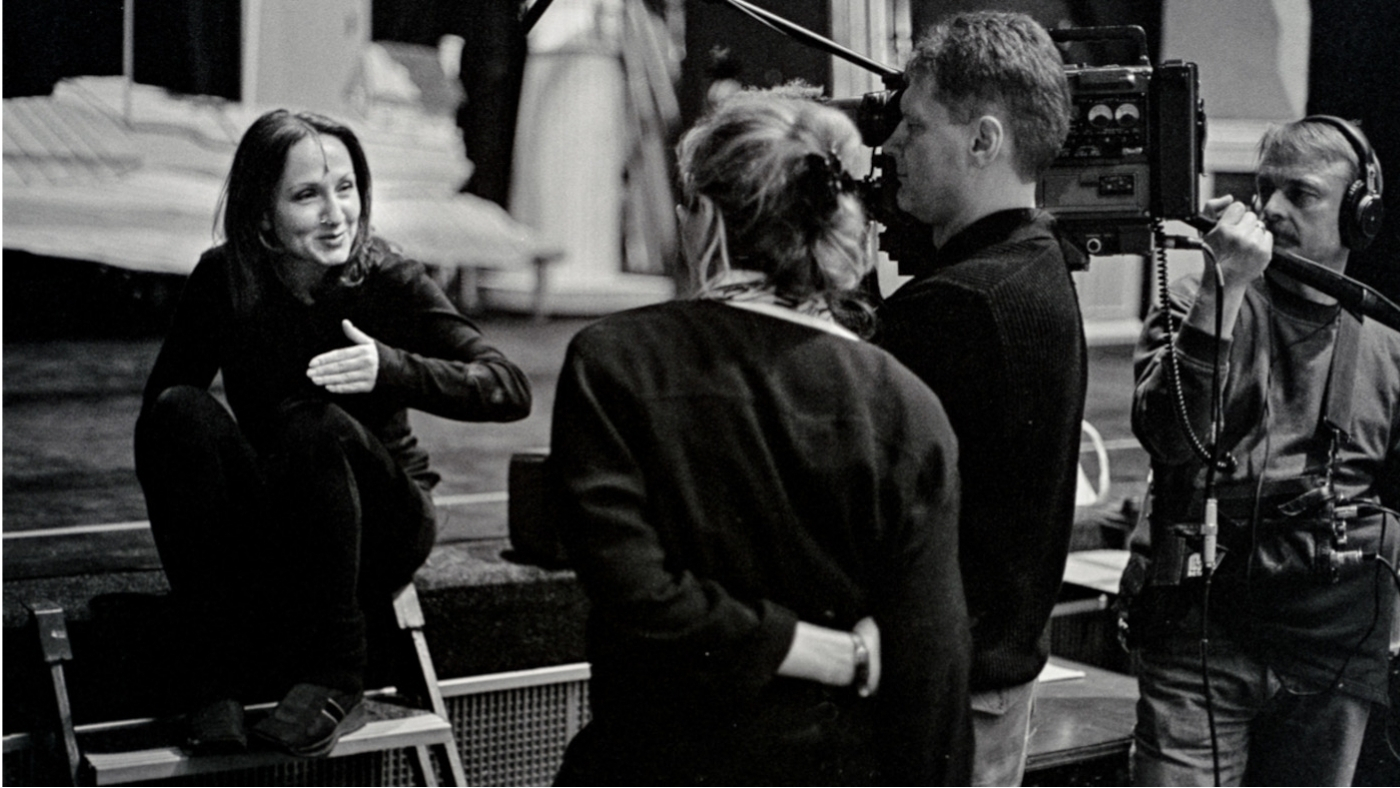
At the time, I had managed to get a project called Women at the Turn of the Millennium approved at the television station. It was supposed to consist of ten five-year films following various women.
Shortly before that, I had read an interview with Bára Basiková in which she described how she was fully supporting her family: two four-year-old children, herself, and her stay-at-home husband. I found it interesting as a reversal of traditional male and female roles. That was the initial impulse. I wanted to explore this unconventional family model, and Bára agreed to the five-year filming project.
But then what I’ve come to expect from longitudinal projects happened: everything turned out completely differently. The marriage model with a stay-at-home husband collapsed about a year after filming began. Another man appeared, and the entire original thematic thread disappeared.
Nevertheless, you continued filming Bára Basiková not only for the series Women at the Turn of the Millennium, which premiered on Czech Television in 2001, but for more than twenty years after that.
For the television series you mentioned, we made the film Bára B. (LIVE). Later, I teamed up with producers from Negativ, Kateřina Černá and Pavel Strnad, who are big fans of Bára, especially of her music from the 1980s. Thanks to them, we were able to continue with the project.
There was a short break between the end of the first film and the moment when Negativ came on board, but Bára and I continued to meet regularly. Altogether, the film covers fifty years of her life. I filmed thirty of those years myself; twenty years from the beginning of Bára’s career are represented by various archival materials.
“At the same time, Bára may have begun to define herself internally through singing.”
Were you able to find enough archival material? Did you do any more detailed research into Bára Basiková’s life?
I enjoy exploring archives, although the period documents in this case were relatively short. For example, a student film by Milan Tomsa and Petr Zelenka from 1988 is less than twenty minutes long, and that was the longest material available. As for research, my preparation mainly consisted of staying in constant contact with Bára. Rather than academic research, it was more about naturally sharing our lives. I got to know her more deeply while filming.
This is probably where the difference lies between documentary portraits and your longitudinal films. You aren’t trying to create a comprehensive portrait of a person from youth to old age, but rather to capture their life as it unfolds over time.
Exactly. She does reflect on various things in the documentary and occasionally refers back to the past, but it’s a completely different way of working from the process used to create one-off, often rather “affirmative” celebrity portraits. That’s also why other people don’t comment on her life in the film and add their own statements to create a complete picture.
Nevertheless, the portrait aspect is present in the film through the archives, which fill in the gaps in her life before you began working on the project. For example, the excerpt from the television program The Whole Family Sings establishes the family thread of the film, including the singer’s complicated relationship with her mother.
This fragment defines Bára to a certain extent. She told me how she was always singing at home. Her grandfather – that is her mother’s father – supported her greatly. Her mother didn’t at all—she dismissed Bára’s attempts at singing, calling it “squawking.” At the same time, Bára may have begun to define herself internally through singing.
Did you choose the archival materials only once you had finished filming and knew what would be useful to you thematically?
I already knew and used some of the material, such as The Whole Family Sings, in the first film. We knew about some of the other material as well, but then we kept searching to expand the mosaic. I make all my longitudinal films this way: the material is collected over a long period of time, and editing only begins once there is a clear deadline for completion.
We sometimes hear Bára Basiková’s voiceover over the archival footage. Did you record that retrospectively as well, once the editing was finished?
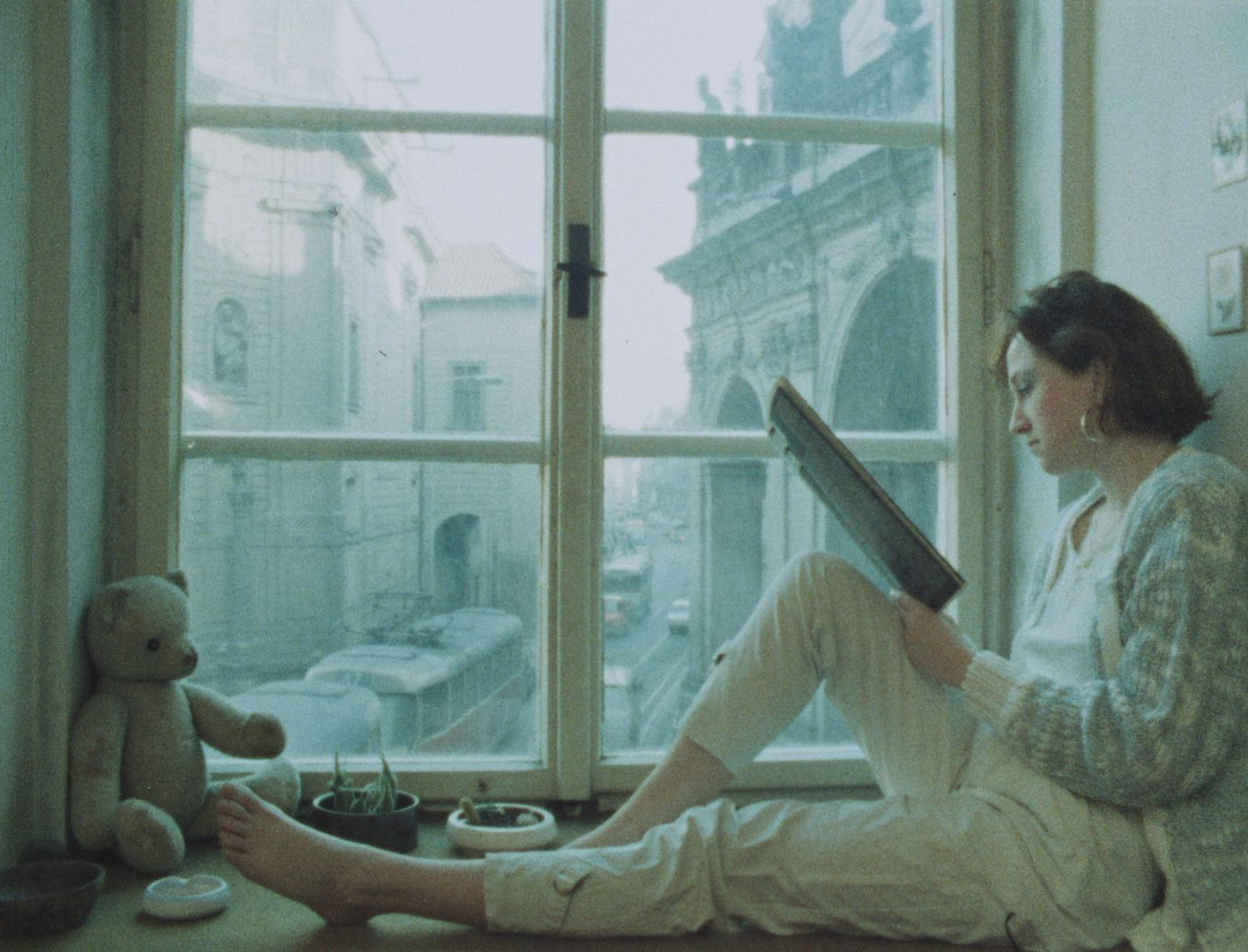
Some of her statements appear directly in the archival material from that time. For example, the sentence about leaving home because she could no longer stand living with her mother. We also recorded some additional material later. In general, sounds over the images are a great way of bringing the film to life so it’s not built solely around talking heads, as is often the case with various portraits.
Through the soundtrack, you can also imprint your own authorial perspective onto material created by someone else.
Absolutely. On the other hand, you’re still limited by the period in which the material was made. I can’t attach statements to a completely different period; chronology still plays a major role. But there was also a moment when the protagonist wanted to return to the past and clarify something. When we began filming the continuation, Bára herself felt a strong inner need to tell the story of her second marriage to its conclusion. She wanted to state clearly in the commentary that “everything that was said back then was a lie and deception,” as she puts it, and that her partner’s supposed daughter was actually his mistress. It was important to her to include that twist.
There were many such twists in her life. Certain situations and relationship patterns repeat themselves cyclically. Weren’t you afraid of monotony?
When you follow a reality that unfolds independently of your own wishes, you never know what dead end it will lead you to or how you’ll deal with it. The fact that these things repeat themselves in her life isn’t something you can influence as a director, but that doesn’t mean you fail to notice certain changes. When Bára split with her first husband, the next one seemed like a worldly man, but even then I sensed certain problems, although Bára didn’t openly describe the entire relationship disaster until a later filming session. Her third husband was fifteen years younger, and from the beginning I felt that this might not be quite right either. The patterns repeat themselves, but always with different dynamics and different people involved.
“A longitudinal filmmaker has to approach reality with enormous humility and must not construct an overly rigid framework in advance.”
Is it a characteristic of most of your documentaries that reality ultimately takes a different direction than you expected?
It depends on what “a different direction” means. A longitudinal filmmaker has to approach reality with enormous humility and must not construct an overly rigid framework in advance. You have to be constantly prepared to respond to what comes, even if it destroys the original plan. I define longitudinal filmmaking as a bet on uncertainty.
Katka is a beautiful example. The filming also originally began for the television series Women at the Turn of the Millennium, and the intention was to follow a drug-treatment therapist and two of her clients. But after some time, the therapist withdrew from the project, and one of the clients successfully completed treatment and left for America. Only Katka remained, having discontinued her treatment prematurely. So the original concept about the therapeutic process became a story of a descent into addiction. The uncertainty of how wide the gap between your plan and reality will become is often the most difficult and, at the same time, the most interesting part of the work.
At the same time, that probably contributes to the emotional demands of longitudinal filmmaking: you spend a great deal of time with the people you film, you become connected to them, and that makes you experience their personal tragedies all the more intensely.
Yes, when you know someone for a longer period of time, the relationship changes and deepens, but I do this voluntarily. It’s not as though someone is forcing me to do this. On the contrary, I constantly have to persuade people to give me money. No one has ever approached me and commissioned me to make a project. It has always come from my own desire.
So you’ve never been approached and asked to create a portrait of someone?
I was offered the opportunity by Arte to make a film about Miloš Forman. But that was at a time when his health was already quite poor and he refused all filming. We knew each other, had met several times, and Miloš Forman had reflected on my films from a distance. If he had been in good health at the time, I think he would have agreed to it. In the end, it became an archival compilation film. That was the only major external offer I received. Otherwise, I always had to push everything myself and persuade people. Sometimes I felt I was starting to be annoying because of this.
Most of your protagonists are “ordinary” people who live relatively ordinary lives. Does your method change when you’re filming someone who, on the contrary, is accustomed to media attention and knows how to behave in front of a camera?
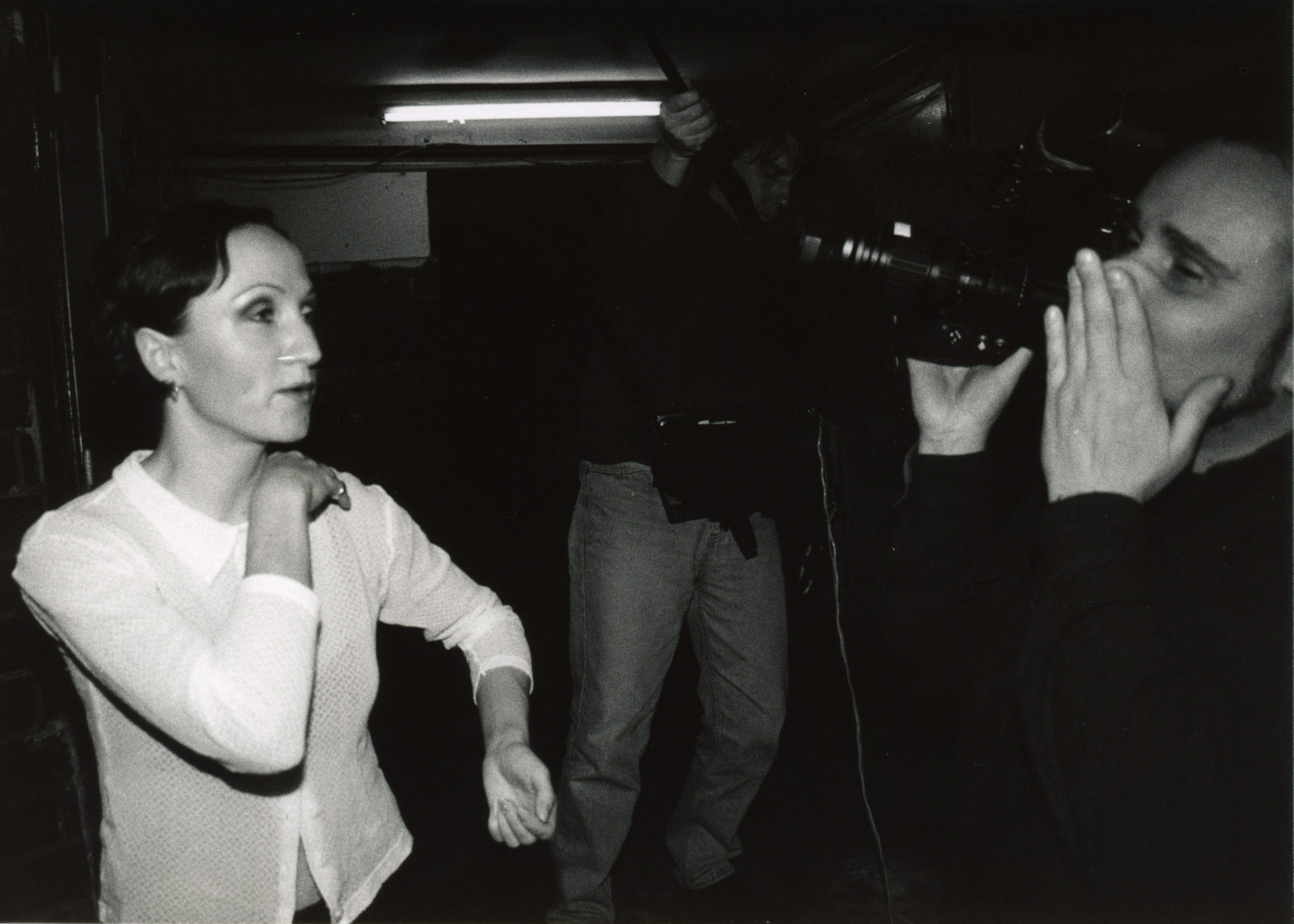
I was curious to see how Bára would react, but I didn’t want to make a film about a celebrity. From the beginning, I defined it as a film about a woman and a mother who happens to also be a singer. Her singing wasn’t a priority for me. During the actual filming, it became clear that Bára could be completely authentic. I never felt that she was pretending or putting on an act. If she didn’t want to talk about something, she said so directly, but that rarely happened.
If you wanted to tell more about her as a mother than as a famous singer, did you consider giving the film a one-word title consisting only of the protagonist’s first name like in your previous films Katka, Mallory, Anny?
I would probably have gone with Bára. But the title is something we decide on together with the producers, and in the end, after a longer discussion, we decided to use Bára’s full name so that it would be immediately clear.
In one scene, Bára turns directly to the camera and says, “Only you know.” During those thirty years, did you ever feel almost like a psychotherapist? Was it difficult to remain in the position of an observing and recording documentary filmmaker?
Our contact continued even during long periods when we weren’t filming. When she was separating from her second husband, Jaromír, she was in a very bad psychological state and even ended up in a psychiatric hospital. We sometimes talked things through. I don’t know if I was a psychotherapist—I don’t feel comfortable calling myself that—but I was definitely a sounding board.
What is important, though, is that at the time I had no idea we would be making a continuation. There was no calculation on my part along the lines of, “I’ll win her trust now so I’ll have material later.” It was a genuine friendship. I wasn’t trying to give her advice; rather, I wanted to help relieve her sense of guilt. At the time, she was blaming herself for everything—she reproached herself for marrying Jaromír and for hurting her daughters by breaking up the family.
I think the trust we had built also made it possible for such open moments to emerge. In the scene you mention, Bára reflects on a major contradiction in her life. She says that, for the tabloid press, she constantly had to be “OK” and wear the mask of a happy person. During our filming, though, I think she was able to successfully take that mask off.
“For about a year now, I’ve been thinking about establishing a foundation to support longitudinal films. I would be thrilled if projects like these were supported systematically.”
Your decision not to present her as a pop star is also reflected in your approach to her concert performances. During these concerts, we often see what is happening backstage, for example when Bára hands her son over to her former husband. There are no more extended singing performances in the film.
In order to fit her entire life into the film, we had to condense the story considerably. If we had left in longer musical passages, the film would have become disproportionately long, or the proportions and rhythm of the storytelling would have suffered. During the editing, a lot of good material had to go. That’s something you have to come to terms with in our profession.
Was the fixed running time the reason the material was cut?
The producers kept saying from the beginning that the film had to have an ideal running time of an hour and a half. In the end, we shortened it to even less. We also have very long end credits because, due to the music rights, you have to list every single song and its authors.
Was the decision to shorten the musical passages also motivated by financial considerations? For example, the costs of the music rights you mentioned?
Michal Pavlíček, Ondřej Soukup and the people from Precedens gave us their music for free. But Jesus Christ Superstar, for example, was an insurmountable problem. We used about four minutes of it, and it cost a very large amount of money. I wrote the authors a personal letter, explaining that this was an independent documentary and that we were by no means a wealthy production. But then I found out that such a letter would never reach the authors themselves. Their legal representatives deal with these matters, and there you don’t stand a chance. The producers from Negativ had to raise a huge amount of additional funding just to pay for the rights.
We had a similar problem with the song Markétka, which Bára sings as a little girl and concludes our entire film. The music was written by a Polish composer whom we were unable to track down for a very long time. It was beginning to look as though we wouldn’t be able to use the song, which would have been a disaster for the structure of the film. Fortunately, we eventually managed to sort it out. Another complication arose with the television show Your Face Sounds Familiar, in which Bára performed as Eva Pilarová. The rights holders wanted so much money for the song we had originally chosen that we had to select a different one.
Nevertheless, when you look back at the period before Negativ, I assume that raising money for longitudinal projects was even more difficult back then.
I went through a period—in the 1980s, after the first Marriage Stories, when I felt that I had found my method and wanted to explore other subjects—when it took about two years to secure funding for another project. Later, when I came to television with the idea of continuing Marriage Stories, it took four years for the project to be approved. It ultimately happened only because Alena Müllerová, my former colleague from Krátký film, became the commissioning editor. For four years before that, I kept showing up there and listening to them calling me a megalomaniac, that I wanted too much and that it was impossible. At times, it was very depressing.
Meeting the producers from Negativ was a real liberation for me, and I’ll always be grateful to them!
That partly explains why, at least in the Czech Republic, so few people work with the longitudinal method.
For about a year now, I’ve been thinking about establishing a foundation to support longitudinal films. I would be thrilled if projects like these were supported systematically. At the moment, it usually works like this: an individual has an idea and then goes through a thorny process of finding funding. If there were an institution specializing in this, perhaps the Czech Republic could become a longitudinal filmmaking superpower.
Going back to Bára Basiková: How did the authorization of the completed film work?
I have an agreement with my protagonists that before the film is definitively finished, I show it to them. Bára obviously saw the final result. I expected that, given the current atmosphere, there might be an issue with the section about her performing with Russia’s Alexandrov Ensemble. But Bára reacted by saying that it was part of her life and she didn’t want it removed from the film. If she had wanted me to cut it, I would have, but I’m glad it remained there as an example of her openness, even though it’s impossible to predict the audience’s reactions in advance. It is clearly stated, however, that this was in 2012, before the annexation of Crimea.
Together with the brief mention of the Russian invasion of Ukraine and the COVID-19 pandemic, during which Basiková was labelled a disinformation spreader, this is also one of the few moments when the film directly touches on politics or more broadly on public affairs more broadly.
There are multiple social and political reflections in the footage we shot, and we used several of them. Television commissioned a three-part series, and the contemporary context appears more prominently in it—for example, her support for Petr Pavel during the presidential election.
Bára’s former partners don’t exactly come off in a flattering light in the film. Did they also have an opportunity to authorize the final version?
In 2001, Bára showed the first film to her first husband. Her last husband, Petr, saw this new feature-length version. Bára told me she was a little nervous before the screening, but apparently he was thrilled with the result.
As for her second husband, Jaromír, her attitude toward him is one of complete and unequivocal rejection. He deprived her of a great deal of money. When I told Bára that he might sue us because of the film, she responded very firmly that he was welcome to do so. We will see what happens after the premiere. Her daughters and son have also seen the film. After the screening, her son hugged her and said, “Mom, I was such an idiot. I’m sorry.”
“What matters to me is not primarily the aesthetic “beauty” of the image, but its truthfulness. It is crucial to me that the cinematographer isn’t disrupting the mood of the moment.”
Given that the filming lasted thirty years, I assume many different people took turns behind the camera.
About ten cinematographers took turns. Having a stable team is ideal, but with a longitudinal project this long, for obvious reasons, you can’t insist on it at all costs. Lately, though, I’ve managed to keep the same crew, consisting of cinematographer David Cysař and sound recordist Petr Šoltys.
Wasn’t it difficult to maintain visual continuity as both people and technology changed over the years?
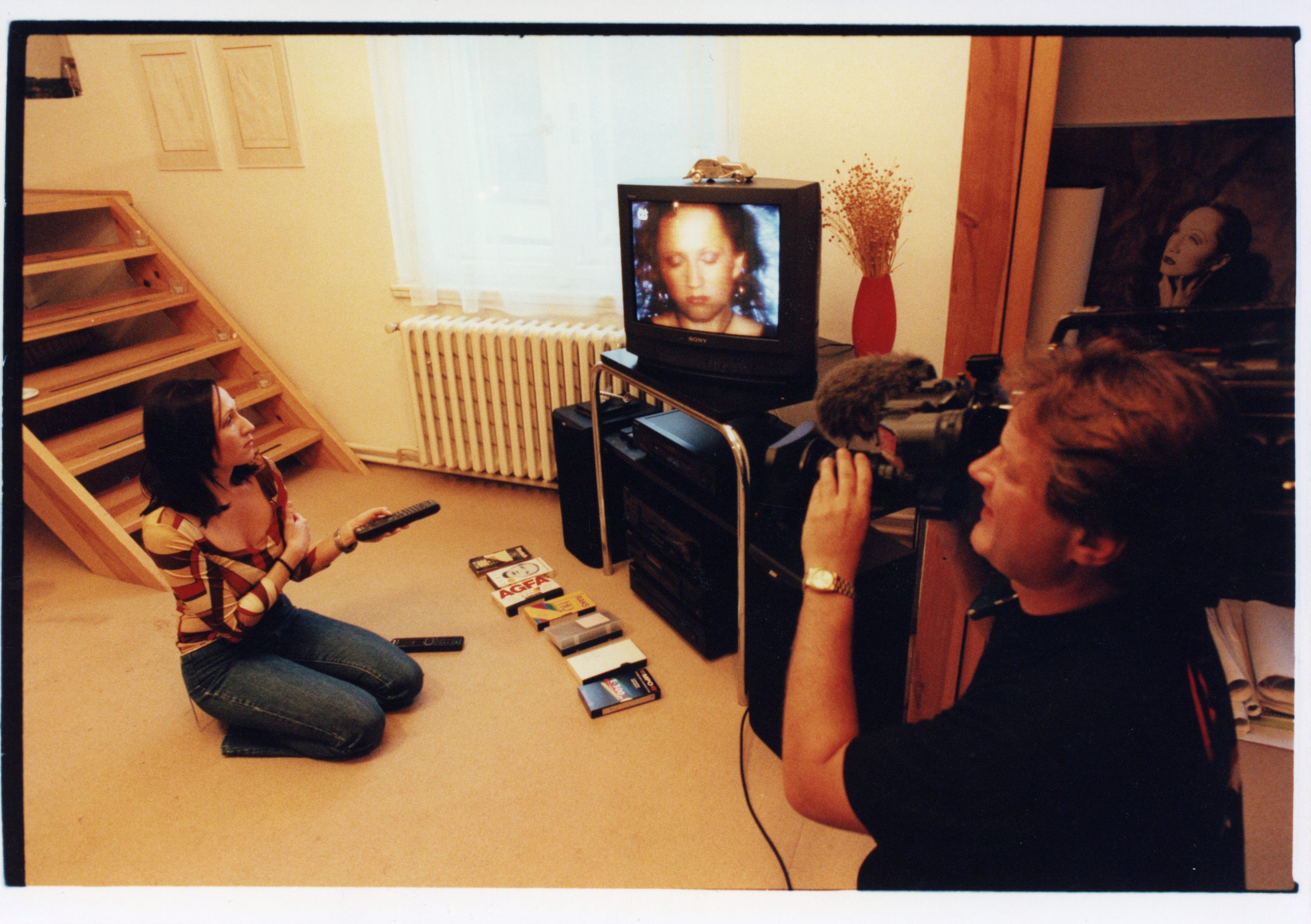
We used virtually every technology available during the period covered by the film. The image was, of course, heavily adjusted in post-production. David Cysař did the color grading so that the different materials would match one another. Early digital cameras had extremely harsh colors that had to be toned down. Bára’s first wedding was shot on VHS, which is visible in the image. Her third wedding was filmed by someone from the family. There wasn’t much we could do with that technically, but I don’t think that matters as much with home videos.
Did you have any specific requirements for the individual cinematographers?
What matters to me is not primarily the aesthetic “beauty” of the image, but its truthfulness. It is crucial to me that the cinematographer isn’t disrupting the mood of the moment. I don’t like giving frequent instructions like “Move a little closer to the window.” Both the equipment and the people operating it should be as unobtrusive as possible. The protagonist needs to focus on what they want to say, not on the fact that they’re being filmed. When I previously had to work, on rare occasions, with someone who had a problem with this and created tension on set, I preferred not to work with them again.
At Krátký film, I once made a documentary about Jan Zrzavý for his 85th birthday. We were filming an interview with his childhood sweetheart, an older lady. She was a little confused at first, but then she calmed down and began talking beautifully. And at the most intimate moment, the sound recordist shouted, “Cut! The lady’s stomach is making an awful noise!” And that was the end of the atmosphere. That is exactly an example of how technology can destroy a mood
With Bára Basiková, the atmosphere must have been quite intimate. I’m thinking specifically of the scene in the maternity ward, where she’s breastfeeding and breaks down in tears several times. How did that come about?
We had agreed on it beforehand. Bára had consented to it and knew what she was getting into. The fact that she breaks down in tears there is simply something that life brought about. As a director, you can’t plan that. But I would never have allowed myself to film something like that if she herself had not been one hundred percent comfortable with it.
In documentary filmmaking, the boundary of trust is also very fragile. The person behind the camera always has more power, because they decide how that person’s life will be told. Do you sometimes have to protect the protagonist from themselves because, unlike them, you know how that intimate moment will come across in the finished film?
I try not to give advice or comment on anything while filming. Everything is dealt with in the editing room, and any problematic statements or situations are cut out. But that doesn’t happen very often…
How did the aforementioned shift to digital formats change your work?
I started out at a time when we shot on traditional film stock. We had to be extremely economical, which created enormous pressure. Some of that has stayed with me, and I still try to be economical. Today, in the era of digital filmmaking, however, it’s useful, for example, to record long synchronized interviews. When people talk for a long time, they gradually relax and become more authentic. At the beginning, when you sit a protagonist in front of the camera and say, “Now talk,” their delivery is often stiff. After a while, though, the tension subsides, the conversation loosens up, and great statements start to emerge. You can then use them purely as sound over different images, or simply as a short piece of on-camera testimony.
How difficult was it to piece together the individual situations in Bára Basiková’s life so that the whole film wouldn’t feel like merely a series of random episodes?
I imagine myself stringing together beads representing individual days, capturing that “here and now.” But in the editing room, you have to make sure that the resulting form holds together, has a clear arc, and works as a coherent whole. Editor Jakub Hejna, with whom I make most of my longitudinal films, is very thoughtful in this respect. But he wasn’t able to edit the film about Bára due to health problems.
The film was edited by Adéla Špaljová, which was your first collaboration. Were you able to find a common language?
Yes, Jakub recommended her to me. Adéla and I had to talk through a lot of things, because she didn’t know my methods or the way I think. But she brought a specific female perspective to the project that Jakub probably wouldn’t have conveyed. We didn’t have any disagreements; it was a continuous creative and inspiring dialogue. Our story editor, Tomáš Bojar, was also great. He would send us long, detailed notes several pages at a time, and he served as a valuable additional voice.
An interesting moment arose once everything was already finished. Adéla suddenly called me to say that she had checked the film one last time and found a section that, in her opinion, slowed the film down terribly and should be removed. It was a passage in which Bára plays Lucrezia Borgia in the theatre: first there are shots from the rehearsal, followed by part of the performance in which she sings to a dead man in a red dress, telling him that she forgives him. Adéla argued that it slowed the rhythm down terribly. But I disagreed.
To me, that scene corresponded exactly to the reality of Bára’s life at the time—it was during the most intense conflicts with her husband, when they were moving away from each other. Her life was thus going through a permanent cycle of conflict and forgiveness. I mention this because I always try to make sure that the musical element – thematically and in terms of content – corresponds to what the protagonist is actually experiencing at that particular moment, and that song had an irrevocable place there, so we kept it.
“I strictly maintain the chronology. When we do make an exception, it’s absolutely minimal.“
That means that to a certain extent you interpret reality in the editing room, or perhaps that you make the meanings that only emerge more clearly in retrospect more visible?
Yes, you could describe it that way. But that also happens gradually, as working with the material in the editing room sometimes produces unexpected connections. It’s a constant search for form—which is the most beautiful adventure of all.
Does the main narrative line begin to emerge during filming, or is it something that only happens in the editing room?
Not at all during filming. Everything comes together only at the very end. I have a method that I’ve developed over the years: after every day of filming, I have a complete transcript of the dialogue made. Situations and what is happening are described in italics, and each page contains roughly four timecodes so we can navigate the material. I use these transcripts to prepare the edit in detail. But I only start doing that once a completion date has been set, not before.
Of course, there are enormous numbers of changes during editing. Some things are removed, others are added. During filming, you don’t have the exact shape of the film in your head; you can’t. That is also why an outside perspective is important to me. When you’ve been working on something for so long, you lose your distance; the project becomes surrounded by thousands of your own thoughts, and you no longer have a clear eye or ear. Every outside opinion is valuable to me, partly because I myself am constantly full of doubts.
Story editing sometimes requires a certain manipulation of time. Were you ever tempted to rearrange the order of scenes?
No, I strictly maintain the chronology. When we do make an exception, it’s absolutely minimal. For example, if something is filmed over the course of a month, we might switch two scenes from different days. When Jakub Hejna and I started working together, he sometimes tended to work with time more “artistically” and experiment with it, but I felt that in my films, chronology was a “sacred” law.
Maybe someone else could devise a longitudinal project based on nonlinear editing that would be more attractive or interesting to viewers. In this respect, I’m probably a bit primitive, but I still feel an inner obligation to preserve the timeline.
Your filmography is therefore quite consistent, with a constant and recognizable authorial style.
Someone might say that it’s simply a lack of imagination. But I don’t want to change my method. In fact, my very first film at FAMU was already about the transformation of time. I followed a village that was planned to be flooded because of the construction of a dam. The film began with a view of the living village from a particular hill and ended with a shot from the same place of the calm surface of the water, beneath which the demolished village had disappeared. At the time, it was still unconscious and intuitive. Today, I can name my methods more precisely. I know my limitations. When I see someone who manages to overcome their limitations, I envy them a little, but I would rather continue deepening my own well-trodden path.
In the era of social media, everyone now films their own audiovisual diary on Instagram or YouTube. Does this change the meaning of professional longitudinal filmmaking in your view?
Definitely. It used to be highly unusual for an ordinary person to have their own past recorded audiovisually. Today, almost everyone does. But one thing is having tons of material stored somewhere, and another is working with it conceptually, putting things into context and creating a meaningful form out of it. That doesn’t happen on social media; the data is simply accumulated indiscriminately.
Perhaps, though, in time we will see the next generation discover these digital archives belonging to their parents and edit them into something amazing. The question is what quality they will survive in. With traditional film stock, we know that it has an enormous lifespan and retains its value for decades. We don’t know that yet with digital video.
We’re at Ponrepo cinema now before a screening of films by students from FAMU’s Department of Documentary Film, where you’ve been teaching for many years. How do you perceive the emerging generation of filmmakers?
It’s difficult to generalize because it’s an incredibly diverse group of young people. Every year, we admit five students to the documentary program. Some study for quite a long time, spread their studies out or take breaks, but most of them eventually finish. I have no idea what percentage of them actually find work in the field afterward, but that’s more of a general issue.
I am a little sorry that – with some of them – I feel they’re not internally prepared to hold their own in today’s reality and really fight to get their films made. This profession requires enormous social empathy, a thick skin and perseverance. They sometimes lack those qualities. But any kind of generalization is tricky.
Compared with my generation, today’s students have incomparable opportunities. Technology is accessible, they can travel and gain experience all over the world. Over the whole course of my studies, I went abroad only once—with a classmate to a festival in Kraków. Maybe that’s also why we have a little more humility in us, because we’re more constrained by the system. But during my time at FAMU, I’ve witnessed many interesting and highly productive discussions about documentary filmmaking, helped various student films come into being, and gained many new subjects to think about. I’m genuinely grateful for that.
So, as part of your teaching, do you try to guide them toward finding their own path amid this abundance of possibilities?
I constantly repeat one fundamental thing to my students: You first have to get to know yourself in detail. Define exactly what you want to do in documentary filmmaking and what your authorial approach is. I’ve defined mine clearly: I want to capture real life here and now. My path toward longitudinal filmmaking was profoundly influenced by the fact that I started keeping a diary as a child. When you look back at that diary ten years later, you’re amazed by the way you used to think. But the truth of that particular moment is hidden in the record. With the passage of time, you may see those events differently, but the diary reminds you that this is how it happened, and that this is what I thought and experienced at the time. That principle led me to what I do and how I do it.