Documentary film is the propaganda of democracy. Interview with David Borenstein
American director David Borenstein has created a film about propaganda in a Russian school that won the Audience Award at the Ji.hlava International Documentary Film Festival. Dok.revue spoke with him about how he handled subtle cultural nuances, his approach to the theory of propaganda, and how the project changed his perception of Russia.
What was the initial idea for this film? Did the concept develop from the protagonist, Pasha, or did you first decide to make a film about propaganda in Russia?
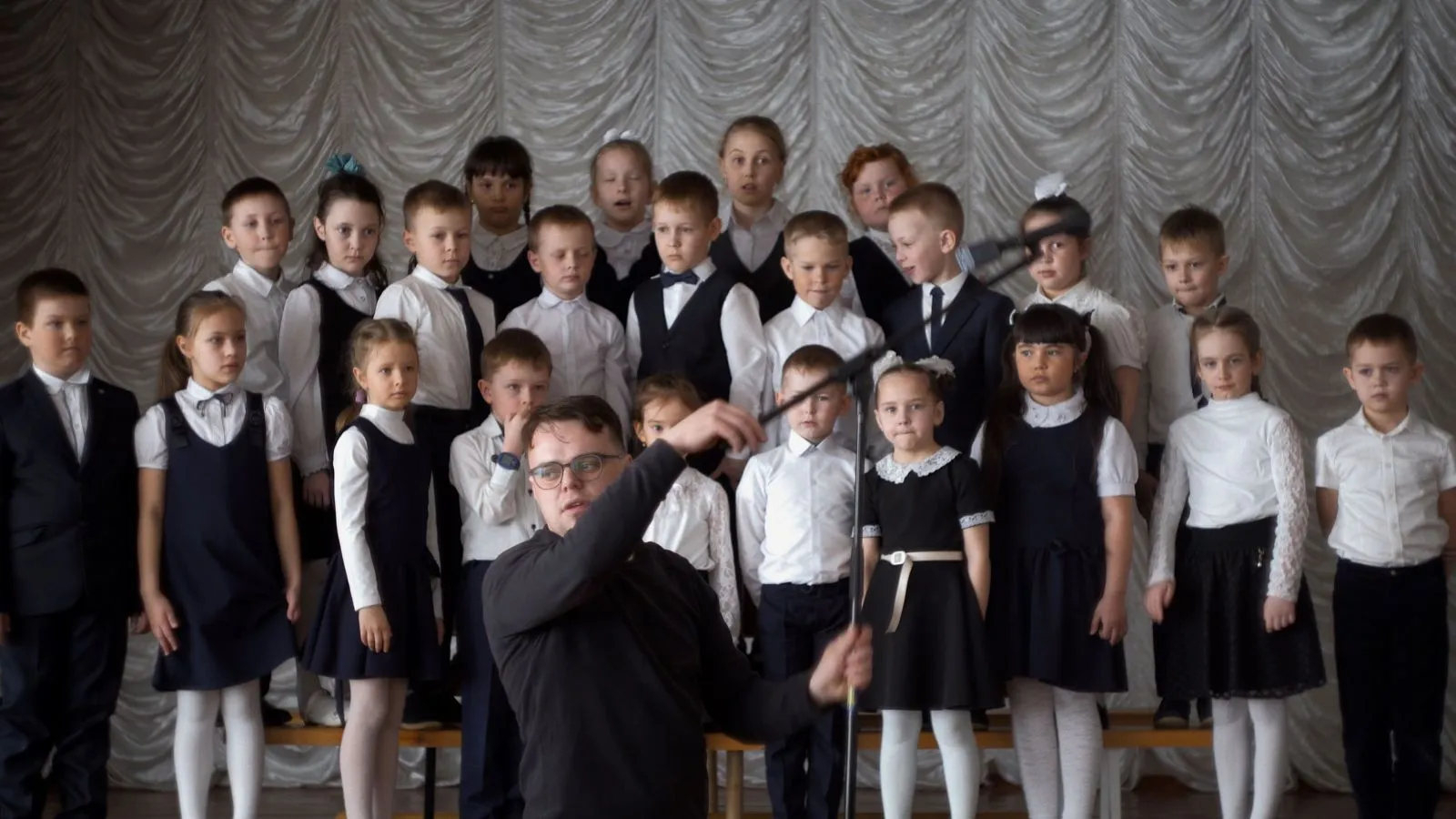
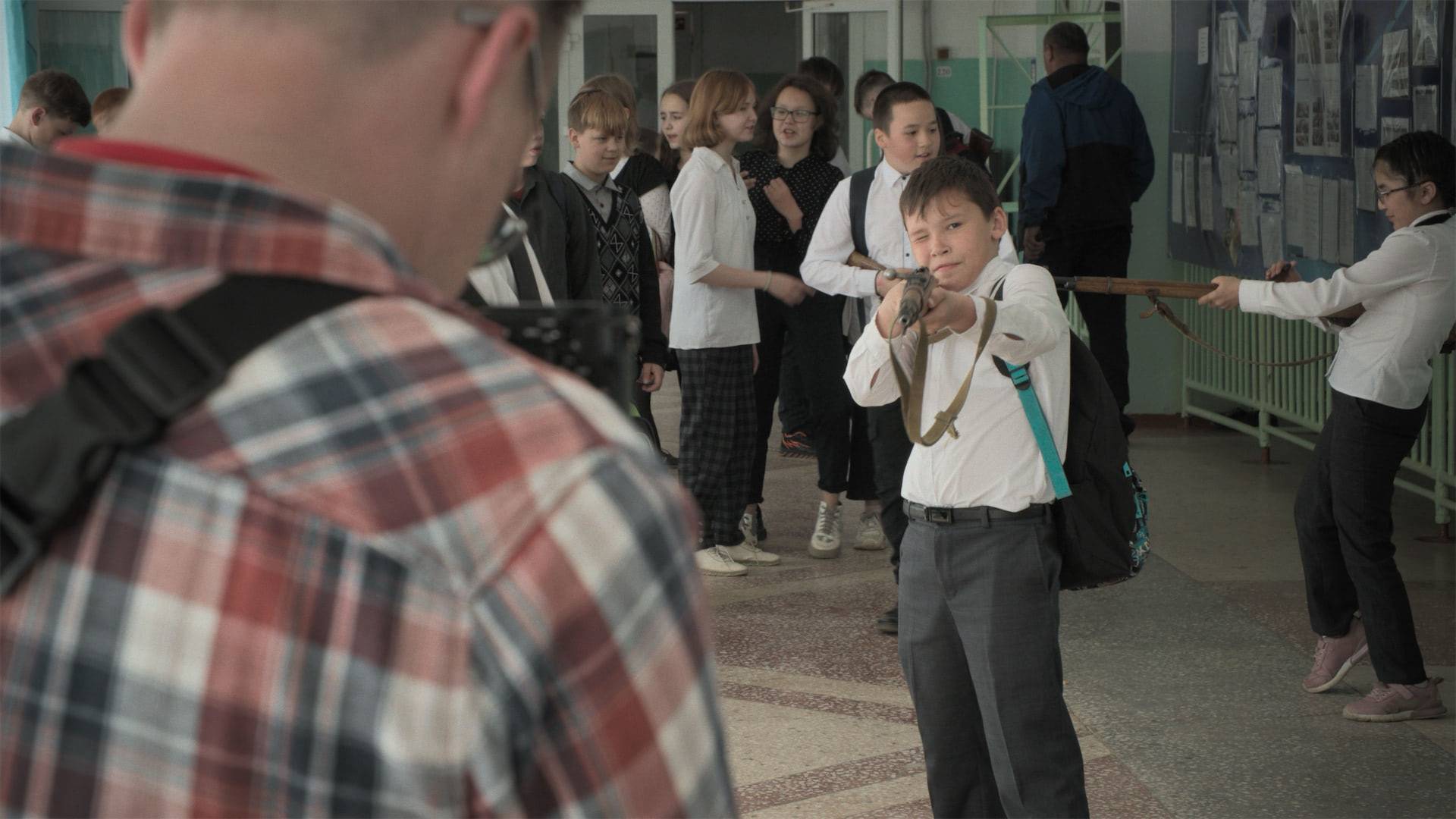
It just came together. The original idea of the film is surely Pasha's idea. He responded to a casting call, because he wanted to find someone to film how propaganda was taking over his school. When I received it, I found it really interesting for a number of reasons.
I've made several films about propaganda, looking at how it works in China, the United States, and elsewhere. I also wrote a thesis on ideology and propaganda in graduate school. It’s always been a fascinating topic to me and one that is really dear to my heart. Then, as time passed and Pasha and I figured out how to work together, I increasingly became more interested in bringing him out as a character, because he didn't have much of an idea of putting himself in the film. And my idea became to center him as a character and that was something that I fought for.
“There are characters here that could be from an old Russian novel, a Kafka book, or even something by Jonathan Franzen or Philip Roth.”
The film has a very classical arc, with a protagonist, a goal, obstacles and even a caricatured antagonist (a history teacher). Was that narrative shape a conscious decision from the start, or did it emerge naturally from the material as you edited?
I was definitely figuring out how the storytelling would work while I was working with it. In general, I think one can focus more on aesthetics or style, but some topics and situations require the approach of throwing the kitchen sink at it. And pretty early on I thought that this approach would work well for this film, because the story is just so good, with characters that could be from an old Russian novel, a Kafka book, or even something by Jonathan Franzen or Philip Roth.
It’s as if they’ve come from literature. And the story itself has so much emotional salience, such clear turning points. Quickly in the editing room, I thought: “I just need to tell this story as clearly as possible,” which is not what I always do. Who am I to put some sort of aesthetic choice on top of this amazing story? That would feel like losing fidelity to Pasha in the story.
Were there any films that influenced how you approached the structure of your film and shaped your sense of storytelling?
I like films that show you a kaleidoscopic view. Films that have both a macro and micro layer and an interesting and absurd relation between people. But I also like films that are very accessible and have clear storytelling. For example, Stanley Kubrick is a really big influence, and his Barry Lyndon would be a strong reference for me on this film. I also like Scorsese a lot, and you can see the opening of Mr. Nobody against Putin is just Goodfellas.
I'm not sure if these were the biggest influences, but in the beginning of the project, I sent Pasha two different films to watch. One was Five Broken Cameras by Guy Davidi. He is a Palestinian cameraman who had a very intimate, first-person perspective on the conflict in the West Bank. Since the character in that film is behind the camera, I wanted Pasha to watch films where the protagonist is also behind the camera. I also tried to get him to watch a lot of How To with John Wilson, because I knew he has a sense of humor and is behind the camera, and I felt that this film could benefit from the attention to minutiae and the way it immerses the audience in daily life through a first-person perspective. Pasha claims he didn’t actually watch it, but I wanted him to.
“We’re not trying to say this is a news report.”
Your film deals with propaganda and the question of truth. But would you agree that documentary cinema itself is always, to some extent, a micro-ideology? It's also about manipulation and building your own truth.
Yes, definitely. John Grierson, who created the first documentary department at the BBC and the first national film board in Canada, literally invented the term documentary in the English language and defined it as the propaganda of democracy. And that is pretty much what we're doing in this film.
We have to be honest: there is no such thing as an ideologically free utterance. I think the film is very nakedly subjective. We're not trying to say this is a news report or any kind of objective truth. It's clearly situated from Pasha's perspective.
Is it possible, in your view, to make a neutral documentary film?
No, not at all.
The film contains subtle cultural and linguistic nuances that carry strong Russian resonance. For a director from another cultural background, that requires very fine sensitivity. How did you navigate that space?
There were some very frustrating processes involving AI translation and other tools, which didn’t really do a good job. So, we had a whole team working on it. Pasha would pinpoint scenes he thought were important, and I had an assistant director who spoke Russian and helped highlight other key moments.
My role was to experience it from the perspective of an outsider, to learn what was happening in Karabash, and then to craft a story that presented those discoveries, this method of exploring such a strange place for most foreigners, in a way that would be compelling for viewers. The strong moments were laid out for me, or at least there was a selection from which I could choose what to include. Then I was in charge of writing the story and turning it into a film.
Did you have a cultural adviser?
The assistant director played a strong role in this respect. She's Russian. For a long time, it was really awkward, because we were communicating with Pasha through Google Translate. Eventually, though, we formed a kind of trio – me, him, and the assistant director. The assistant director was amazing at facilitating communication. It felt like we were finally completely on the same page because of her, so she played a really big role.
How much did you intervene in the protagonist’s reality, guiding, prompting, or framing situations? And how much did you allow the events to unfold naturally? Where do you personally draw the line between observation and authorship?
I think the film shows that we’ve intervened in Pasha’s reality quite a bit. We proposed making the film together. We realized together that he would have to leave Russia in order to make the film. And so the film team helped him leave. I would say that this film had a pretty profound impact on his reality. His life is completely different now because of this film. And as a way of keeping that process open, the plot of the film is the making of the film, and what he had to do in order to make the film. So it's a pretty open door the way the storytelling works.
“Making the film is just an excuse. What I’m seeking is to be changed by people.”
When you work with real people, their lives can stay with you. What part of this experience do you feel will stay with you the longest? Not only as a filmmaker, but also as a person?
Every documentary that I've made has changed me as a person. The way one should approach being a documentary director is to first and foremost be in the world, to experience people, and to allow yourself to be changed by them. The film then becomes a byproduct of that experience. That's the thing that I'm seeking, that's the psychological motivation behind being a documentary director, and making the film is just an excuse to do that.
For me, it was just about being part of this story and helping Pasha make it happen — to witness someone so bold, brave, and a little crazy, willing to take such a risk. This really knocked me out of my complacency. It really made me think: “What are all the things in my life that I accept or I don't bother standing up to?” Pasha is a guy who is so committed to the idea of truth and honesty. And just being around him has changed me quite a bit. It also made me understand Russia on a new level.
How did making the film change your previous perception of Russia?
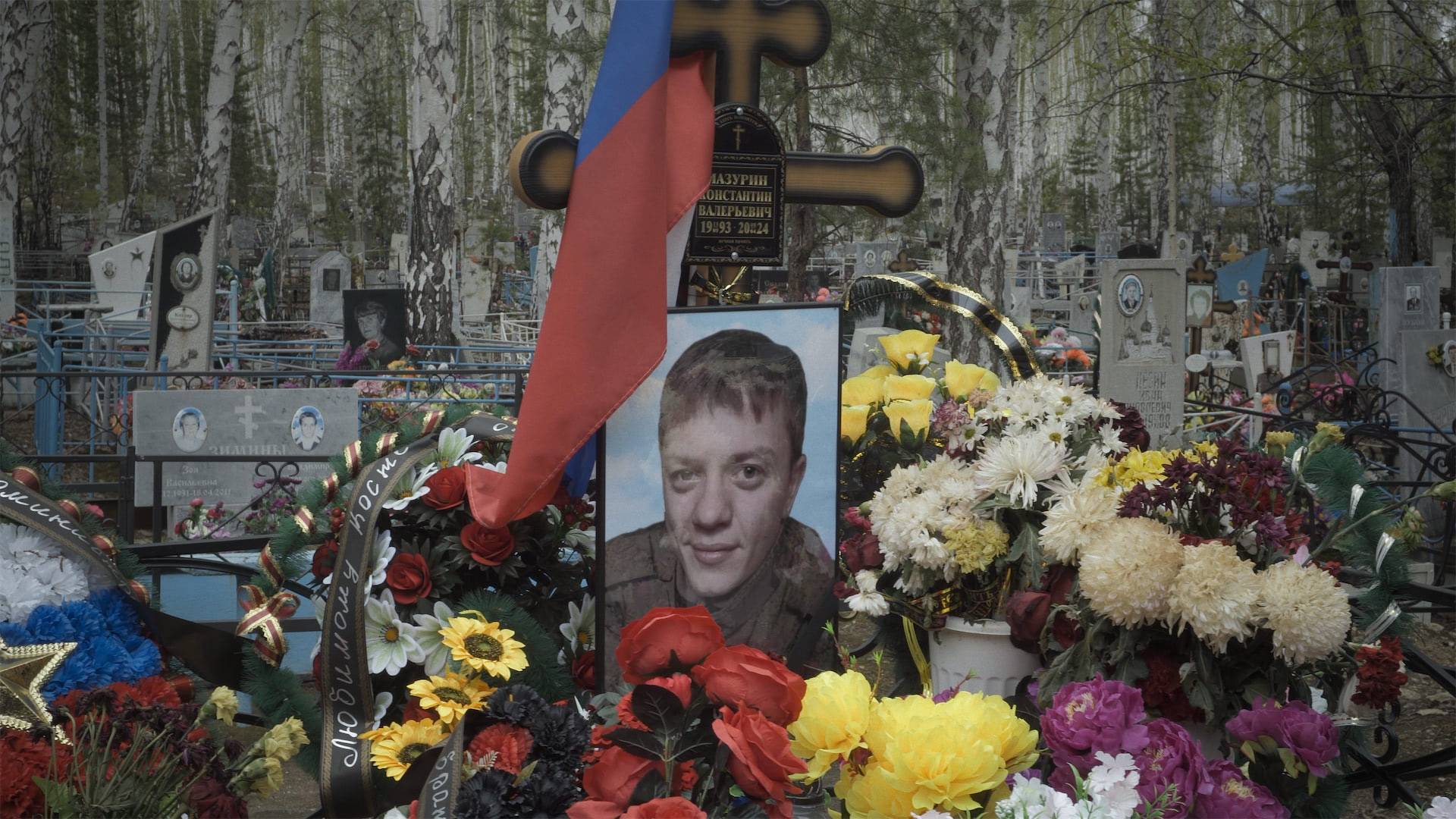
Before this film, my view of Russia was different, but the process of making it changed it in some strange ways. It was a very unusual experience. On one hand, I was seeing absolutely jaw-dropping, frightening material from Russia on a daily basis that confirms a lot of our deepest fears about the country.
Pasha’s footage really captures that, and it made me feel deeply concerned about Russia politically. At the same time, I was able to experience his love for his community and his hometown. While I was watching this footage, it made me skeptical and fearful towards Russia, but I was also feeling this sense of care and love. That tension became a key part of the storytelling. In fact, it made me more interested in visiting Russia than ever before.
As a propaganda expert, what could you tell us about propaganda in Russia? Does it differ in any way from other forms of propaganda you’ve studied or encountered?
I wrote my thesis on the Frankfurt School, focusing on Herbert Marcuse. One-Dimensional Man was the main book I worked with. I’m not sure how much I’m still influenced by that kind of 1970s New Left discourse, but I’ve always been interested in how we come to accept something as common sense and in the variety of ways that it can happen.
I’ve observed propaganda in China, in America and in Russia. What’s interesting is that it operates differently in each place. In China, for example, the government builds its case with a lot of truth and elegant arguments. People tend to believe it and feel passionate about it.
In Russia, that doesn’t seem to be the case. There, propaganda is much cruder. It doesn’t appear to try to convince; it doesn’t contain kernels of truth. Instead, it seems to be something that they kind of whack you over the head with until you’re too tired to lift your head back up again. That’s how I tend to view Russian propaganda. Of course, the most insidious propaganda today is Western — which is digital and rooted in late capitalism.