
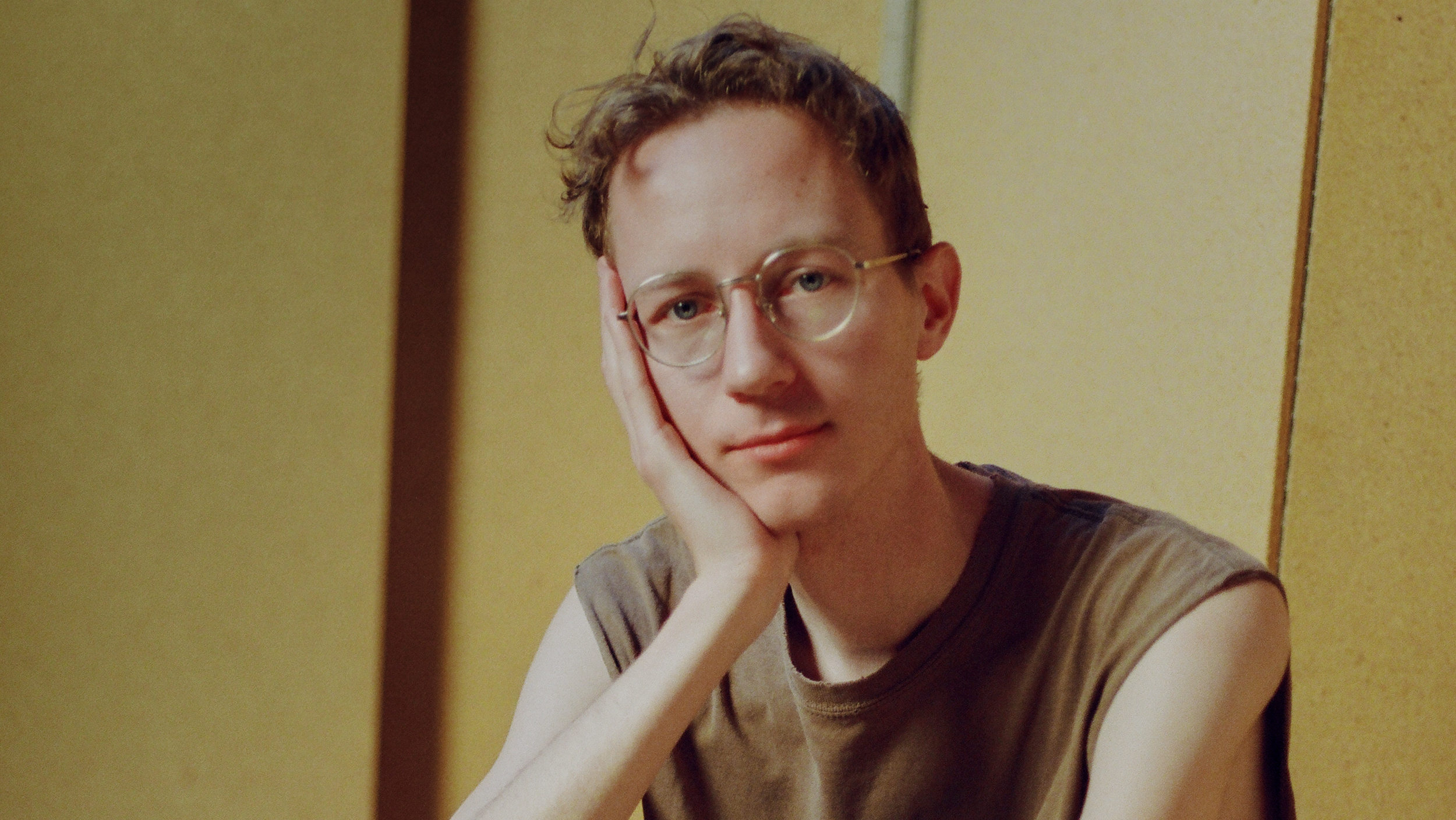
Limits as a Creative Challenge. Charlie Shackleton
In an interview with the film critic and filmmaker Charlie Shackleton, whose experimental work focuses, among other things, on the deconstruction of film genres, but also urban legends, we spoke about working with personal archives, creative limits, and the state of non-fiction audiovisual production in the age of streaming platforms.
Documenta is hosting the first retrospective of your documentary work in Spain. I’m not sure how many similar retrospectives you’ve experienced over your career, but when you revisit your work in this way, do any recurring tropes or new conclusions emerge? Perhaps in a similar spirit to Beyond Clueless, but this time, “Beyond Shackleton”?
It’s a funny experience. It doesn't happen very often, obviously, but I've had two or three retrospectives. Initially, it's always a little bit embarrassing to re-encounter these films, some of which I made when I was only in my very early 20s. They seem quite juvenile in some ways and a bit naive. I'm kind of confronted by this vision of who I was when I made them.
Also, I see all of the unrefined chaotic elements in them. At first glance, it always feels like there's just no logic to my career at all. Then I sort of take a step back and recognize that actually, there are recurring interests in archives and the idea of personal archives. Then, personal storytelling is a framework for building a film around. So I made a few short films that are all about other people telling their kind of well-worn personal stories. And then that led me to finally doing what I think I was probably always destined to do, which is just telling my own personal stories through a similar mechanism. That helps me feel more at peace with revisiting all of these films, even though I still slightly cringe when I see some of the earliest ones.
I think you can’t evade the sense of cringeness, when you're at some point in your career after so many years, and looking at something that you did in the beginning.
It’s like looking at old photos of yourself from five years ago, if you have a terrible haircut or quite embarrassing photos from 15 years ago. Then it becomes quite affectionate again, and you're like, I was so young. The thing is, with Beyond Clueless, for instance, all the bits, all the aspects of that film that I thought were very clever when I was 21, I now think are incredibly embarrassing. And then all the aspects that I took completely for granted and didn't think about at all, I'm actually now quite proud of. A lot of the analytical narration I now watch and listen back to feels like I was trying to pretend to be someone I wasn't. I feel like I was trying to affect this very expert tone that I hadn't really earned, which was partly the joke of the film.
It was like applying that expertise to this quite juvenile subject matter, but some of that stuff now makes me cringe a bit. Whereas the montage sequences, in which the film combines different tropes from teen movies, seem different. I remember cutting those together very unthinkingly at the time, and not particularly over-analysing or over-thinking what I was doing. Now those are the bits I think hold up quite well, and are actually engaging, weird and unexpected in a documentary like that. I just needed a bit of distance from it to really see how I felt about it.
But it’s also interesting that you made that film at a time when you were personally very close to the subject. Yes, by the time you’re twenty, you’ve probably already finished high school, but it’s still very fresh in your mind at that point. So in a way, you’re also coming to terms with yourself. And that includes that feeling of awkwardness. Just like returning to this work as a youthful endeavor with the realization: “Okay, this was me during that specific era,” which is actually what the film does.
I agree, although if anything, I wish it were more personal. I think I was afraid at the time to make it a personal film because I thought no one would care. The fact that the movie is only about the teen movies of the 90s and 2000s is a thing. At the time, I remember coming up with all of these elaborate explanations for why that was the case. And my view was that there was an explosion of production in this era of these movies. And they are particularly interesting because they do this, and the teen movies of the 80s don't. But all of that was clearly not the point. The point was that those were the movies I grew up watching, and I think I was just sort of embarrassed to accept that that was obviously the case, and the movie was obviously very personal to me.
Part of me wishes that I had embraced that a little more. I think that what's taken time for me and my career to accept is that movies are inherently personal, and you can acknowledge and play with that. I think so often the films I've made have almost unknowingly been a way for me to process my own life, experiences, or personality.
“I think you need that freedom or fearlessness to make something boring or something that no one will be interested in.”
And did that approach of including yourself more in your pieces, as it is present in the Zodiac Killer Project, shift simultaneously with the general vibe around some of the fictional elements and artwork in general?
I don't think I've consciously thought about that shift. But then I do think it probably wouldn't have happened the way it has for me if I'd not been exposed to so much online nonfiction content, if you want to call it that. Something I found very interesting about that is the willingness of people to make a nonfiction film even though it wouldn't typically be called that, but they are online on social media, YouTube, or wherever, and they tell stories about very minor things. Some of my favorite online content will just be someone doing something incredibly mundane, but thinking it's worthy of documentation, and giving you a window into their life through this odd little curiosity.
I've never really made this connection to my own work, but I think it helped me get over the hurdle of thinking if anyone would care about this, because that was always the question for me in the past. I asked myself if I have a little story from my life that is interesting enough to tell a friend or send a voice note to a group chat of me reciting it, is it interesting enough to be a film that a stranger might watch, or to be an element of a film?
It was quite an important artistic barrier for me to clear. But I thought I could just try and see if anyone cares. Actually, what's ended up happening most of the time is that there's something interesting about taking something that doesn't really deserve to be a film and just forcing it to be one. I think that
I wouldn't have made that last film, the Zodiac Killer Project, without the willingness to think that maybe someone would care about the film I didn't get to make.
Do you think it's also connected somehow to authorship self-confidence, like that builds up over time?
It's certainly a reinforcement. I made this short film two years ago called Camera Test that was obviously very minor, almost an improvised spur-of-the-moment thing. It literally took five minutes to make it. And then when I got the footage back, the editing was literally picking the in and out point, because there are no cuts in it. I remember just thinking I have no idea if this is interesting to anyone at all. But so many people responded so positively to it.
That made me too confident because I started trying to make films out of every tiny thing. Half the time, people reacted that this got too far, and it's not interesting at all. But in a way, I think you need that freedom or fearlessness to make something boring or something that no one will be interested in. At least for me, that worked well because it means you just keep trying things. And some of it will stick, and some of it won't. I think I'd much rather have a career like that that's just full of attempts than one that is very polished and carefully constructed.
Your films are less about the stories themselves and more about how those stories are constructed-the tools, conventions, and mythologies of teen films, horror, true crime, conspiracy theories, urban legends, and so on. With films like Beyond Clueless and Fear Itself, you also seemed to anticipate the rise of the video essay format before it became widespread on platforms like YouTube. Do you feel you’ve developed a method you return to, and if so, are you interested in reinventing it?
Those first couple of films, being video essays, were entirely constructed from existing films and felt like a really organic next step after film criticism. It felt quite familiar. Especially because most of the film criticism I'd done had been online, and it had been quite like multimedia. I had made video essays for the blog I used to run. It already felt like the same thing. Recently, when I made those films, I had just been exposed to a bunch of very formative filmmakers working in the mode like Thom Andersen. It just seemed like a very good fit for me and incredibly accessible because I could make a feature-length film for ten thousand pounds as opposed to many multiples of that sum. It wasn't a decision on the basis of: “This is going to be my form from now on.” It just seemed like an available style that, to some degree, is your own.
It didn't even feel like my own, though. It felt like I was kind of borrowing it. Then I learned through working in that way. Even now, I have kept elements of that. Even the most recent films I get for the project, which are, for the most part, newly shot footage, still have those little video essay sequences that were never even part of the plan. I think my mind is just so used to working in that way now that they kind of came forth during the making of it. I never want to be too reliant on any tool, but it does feel good to have them available. Especially ones like that that are so cheap.
In a recent interview, you mentioned that you often look for ideas in physical archives or conversations with people, rather than searching online for inspiration. In your view, what is the advantage of approaching research in this way?
It’s the difference between imagining the thing you want and then trying to find it, which in my experience never really works in an archive. I work as an editor as well. I get this sometimes with directors who have planned out a sequence and decided they want a really beautiful piece of footage of a church in Madrid in the 1930s with a married couple standing outside. Then you go to every imaginable film archive, and the best you can do is a church that's actually in Barcelona, it's actually the 1940s, and it's not a married couple, but there's a family. You get some sort of weird approximation of the thing, and it ends up feeling very distorted in the film itself because there's this feeling of trying to take something and make it something else.
What I like about the other approach, which is going into an archive and just seeing what fronts you, is you're working on the archive's own terms, and you have to be receptive. It's just been a very reliable way to find interesting stories, odds and ends that no one else has necessarily used.
That's the other thing: if you go into an archive and just request a folder, there's a good chance you're the first person to open that folder in 50 years. And most of that material probably won't be on the internet anyway. It might be incredibly boring, and often it is, but every now and then there's just something in there.
Is the advantage the exclusivity of the material?
A lot of documentary filmmakers I know, if they're making present-tense films, are following a story as it happens. And especially if it's even a remotely high-profile story, they're not the only filmmaker pursuing it. The idea of trying to keep up with real events like that, compete, and have this acquisitive approach to filmmaking honestly makes me so stressed imagining it, that I think I'm much more comfortable digging into the past. Often, just finding something that matters if another filmmaker discovered it, because what's interesting about it to me is probably not the same thing that's interesting about it to someone else. It’s not that it's really timely, groundbreaking, or newsworthy. It just has a weird element in it that has piqued my interest.
Was it like that with the Fish Story?
That’s, in a sense, the most peculiar example and slightly different because that was just my friend, whom I was using as an archive. But exactly, I have so many similar things with friends that I'm forced to retell the story. I just love anecdotes. 10 years ago, when I made Fish Story, the way those stories would come out was sitting around in a bar and having someone tell a story. Now I feel like the equivalent is voice notes. How often do I send voice notes back and forth with friends, telling stories from our lives? The kind of question with Fish Story was that you take something so small and seemingly stupid and actually treat it as though it were worthy of a film made about it.
You mentioned an acquisitive approach to certain material or topics. Are you thinking of any specific examples of films or productions made around the same time, and that followed the same path?
The Fish Story premiered at Sundance in 2017, and I will always remember that at the same time, the first Trump inauguration, while we were all there in Utah. There was a documentary in the festival about the Trump campaign that had been made in such a rush that they managed to edit footage of the inauguration into the film even though it happened during the festival. It happened on Tuesday, and by Thursday, this film was premiering with new footage. Everyone was making a big deal about how impressive this was and how it had managed to be so up to date, but obviously, no one has talked about that film since. I can't even remember its title. It ended up being one of however many dozens of films about the 2016 presidential race, none of which had any lasting impact or legacy.
And so I think it's things like that that come to mind. Everyone's very aware that something's very newsworthy. And I suppose especially in the case of something like that, for an American filmmaker, it's also quite a scary thing. This very strange, unfamiliar thing is happening in your country.
You feel like you're losing control a little bit. You want to kind of exercise control or seem to be doing something. So you have this big tranche of American documentaries that year, and a couple of years after that were responses to the Trump presidency. A lot of them felt to me like they had been made too hastily. I think there's an upside to working fast, which is that you can capture something live, unrefined, and maybe contradictory, but I think what that time frame is not good at is creating something lasting, something that's the final word on a subject. It felt to me that's what all those films were trying to be.
In many of your films, you often work with large amounts of archival footage. What makes you drawn to the particular clip or video?
The thing I'm always thinking about when I watch any piece is the context it carries. You may or may not know that before you watch it, or it just comes through watching it, but contextual information about when it was made, who, and by whom. The thing I always find most interesting is where you feel there's a contrast between that context and what it means now. So if you're watching a piece of footage and you have a sense that it was intended to make the subjects seem sympathetic.
But now, 50 years later, it makes them seem very unsympathetic because of the different context, audience, political environment, or whatever it might be. The conflict always sparks my fascination with a piece of material. And that can happen in so many different ways. On the most basic level, it can be the most unremarkable piece of footage of people walking up and down the street, which might be incredibly boring to watch the day it's shot. 50 years later, it becomes automatically interesting. I would love to see footage of my street where I lived 50 years ago. I could probably watch hours of that just to see what it was like, what cars are parked in the street, who's walking up and down, what are the sounds of it, how much does it remind me of the street that I know, or how much does it not. Any shift in context that brings a piece of archive to life in an unexpected way feels like the thing for me.
“I can't imagine making a film that doesn't, on some level, feel like it's a commentary on all of the films that have come before it because I think that's just sort of inevitable.”
It’s interesting that you mention conflict and shifts in context, because I also feel that many of your films are, in a way, characterized by a certain ambiguity. I remember a passage from Beyond Clueless about the film The Girl Next Door, which seems quite strange in today’s context, where a promiscuous girl is morally saved by a reserved boy. However, this and other similar sections do not contain direct commentary. The Zodiac Killer Project works with the same rhetoric. It’s a delicate balance between criticism of the genre and respect for the source material. How do you approach this ambiguity?
Zodiac was an interesting process of finding that balance because I didn't want it to feel like scolding. I had a real affection for all the examples used in the film. Even while I also had real ethical issues with a lot of them. And it didn't seem very interesting or reflective of how I felt to adopt a very serious, scalding tone, saying it's bad. The thing that I was trying to capture instead was the tone of so many conversations I had with other true crime filmmakers, where we had talked quite frankly about all the ethical concerns that we had about working in that genre, but inevitably also in a kind of flippant way that I think occurs naturally when you're confronted with the contradictions of that genre day in and day out.
It is the indignities and frustrations of any other filmmaking process, but you're also emotionally dealing with a subject that's so weighty and serious and has real people's lives at its center, it becomes very hard to maintain that balance. People do become a bit kind of flippant, and it can be a kind of queasy, tonal contradiction there. My aim was not to give a moral lesson, but to let my own presence in the film illustrate the moral contradiction.
Is this an approach that you would apply as a film critic?
I find it easier to contain those sorts of tonal contradictions in an audiovisual medium. You have more tools at your disposal to create contrast. I can show a clip from a true crime, and I don't need to say much over the top of it to create an intriguing contradiction. If I show something very serious and just the few words that I say have a slightly ironic tone to them, then immediately, there's a discomfort in that contradiction. I was never a very expert writer. But I always struggled to create that kind of layering in my prose. Something that essay filmmaking is very good at is creating contradictions.
At this point in your practice, how do you navigate the line between criticism and filmmaking? There’s also the longstanding idea that theory and practice exist in tension. Does that resonate with your experience?
I've always seen them as very intertwined. Even the films with no direct criticism still feel so referential and interlinked with the broader world of film culture. I can't imagine making a film that doesn't, on some level, feel like it's a commentary on all of the films that have come before it because I think that's just sort of inevitable. There are some filmmakers who like to work in total isolation and avoid direct influence as much as possible, but to me, it always just felt like an inevitable part of the process, and I don't really see any difference between making a film that draws inspiration from another or writing a piece of criticism about that film.
In your interview with Letterboxd about the community that formed around your ten-hour film Paint Drying - which consists exactly of what the title suggests - you said you’re drawn more to restrictions and limits than to unlimited possibilities. At the same time, that film emerged as a response to the British Board of Film Classification regulations, effectively turning a bureaucratic constraint into the work itself. Something similar seems to apply to the Zodiac Killer Project, which grew out of your inability to secure adaptation rights. Would you say these are the kinds of limitations you find most creatively productive?
I do need them. That isn't to say that it isn't still irritating. Those are the most extreme examples where I've railed against something, but even when there hasn't been an externally imposed limitation, I've often created my own limitations because I like testing a limit somehow. So that can be something as simple as deciding at the beginning of a creative process that you're only going to work with existing material, and then you know you really struggle to express some part of the idea without shooting new images. That to me feels like a generative problem to have, and that doesn't mean you can't break the rule. Because you might find that it actually needs to be broken. But struggling against a rule has often been a useful way for me to work out what it is I'm making.
What is your relationship to legal - fair use, copyright, and others - and ethical frameworks that can shape or constrain the filmmaking process?
These are the two biggest things I've struggled with in the shifts in UK copyright law over the last 10 years, because they revised fair dealing and fair use. In a way, that's made things much more possible, and I've been able to make work that I probably couldn't have made 10 years ago, but still obviously within tight parameters. It doesn't give you total freedom at all, but for me, that's been quite productive, as the challenge of a piece of work is the absolute furthest you can push this thing. Immediately, you have these very dramatic stakes for the project because I can walk right up to this line and beyond. The thing will literally be illegal, but if I can get an inch away from it, then it's going to be the most interesting version of itself.
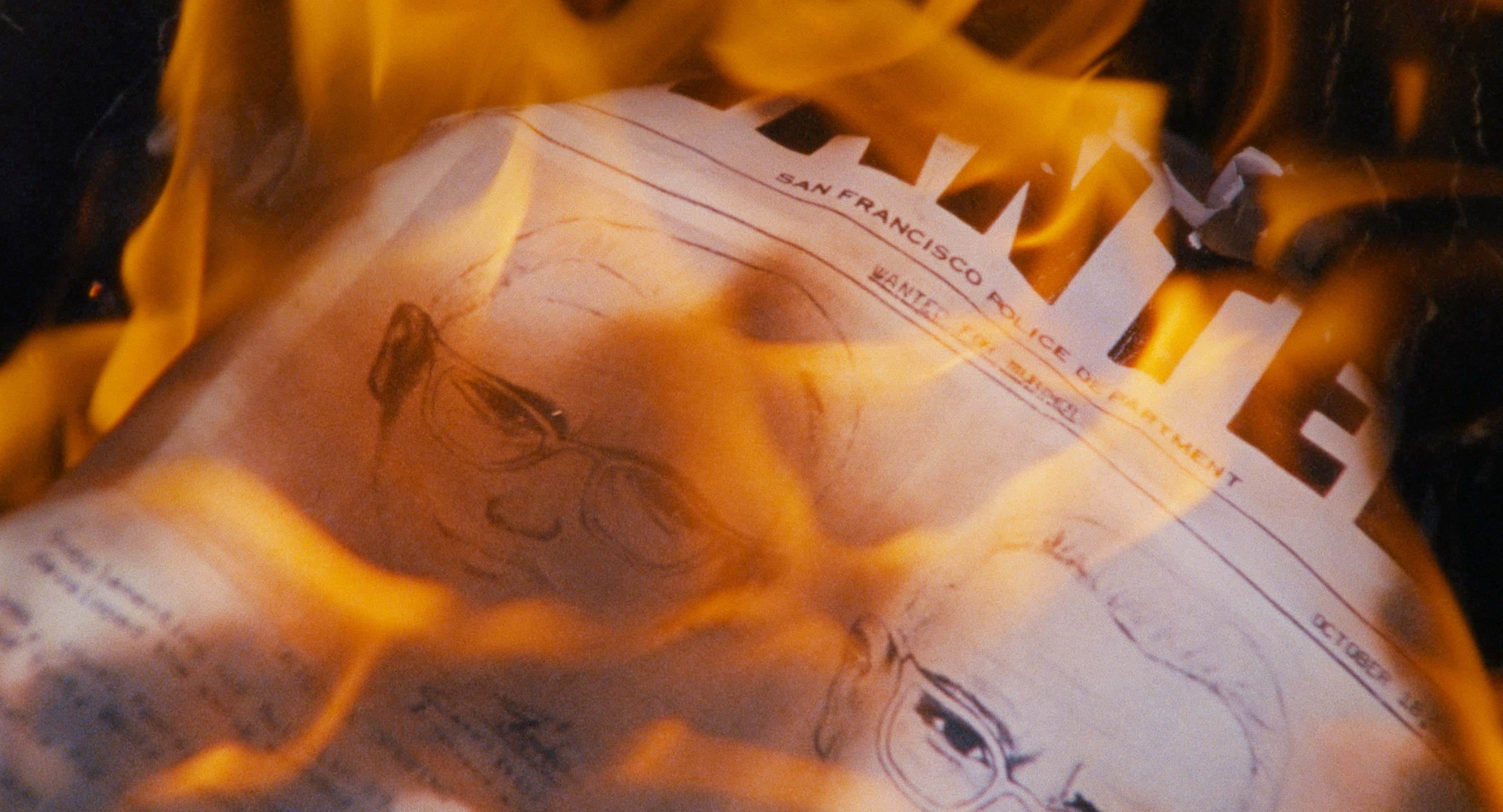
I’ve thought about that in connection with the Zodiac Killer Project, too. To be honest, the whole situation struck me as a little strange. You have a family that doesn’t want to give you the rights to the book, but you still find a way to get around it and do it. Did you see that as some kind of ethical problem you had to grapple with internally? I know it doesn’t directly involve witnesses to the crime and so on, but there’s still that issue of finding a loophole.
I was very aware as I approached that film that critiquing true crime could also end up just repeating many of the true crime ethical lapses. So many of the most egregious true crime shows made these days do contain a critique of true crime. They'll set aside half an hour where they go, turn the camera back on the audience, and pose a question: why do you want to watch this? I had it in my head that it wasn't a free pass to just not worry about the ethics of true crime because I was the one doing the critique or providing the necessary rebuttal, so I set my.
Yet I knew at the same time that I didn't want to make something that felt comfortable. It felt necessary that it fell on an ethical edge, and so I had to find that line as I went. I ended up sort of instigating some of my own rules as I went along, based on what felt right to me. I decided at a certain point in the edit that I didn't want any of the archival clips of true crime shows and films to have footage of dead bodies in them.
Which, on the one hand, seems like an obvious thing, that if you're making what is kind of a comedy that's critiquing true crime, you wouldn't want these very grisly images of real people's deaths included. And yet when I set that rule, I had to go through and check whether I had any in there. And I did have a couple in the edit, which felt shocking to realize that they could have been in there without me even really knowing. And it was just because these images are used so freely in these true crime shows that they would just be a brief shot in a montage somewhere, or the background of a more elaborate shot of a crime scene. And it was shocking in that moment to realise how much you can just be inducted into the sort of morality of a genre like that through just constant exposure to it.
“It occurred to me that you could probably google: "Zodiac Killer Project free stream”. I found this Dailymotion upload and watched a bit of it. I was quite pleasantly surprised that it is in 1080p and it looks and sounds quite good.“
From your perspective as both a critic and a documentary filmmaker, how do you see the current state of non-fiction cinema in the era of platforms like Netflix?
I’ve always tried to make work with one eye on how contemporary setting documentaries are likely to be watched. I don't see any point in making something that's only going to look right on an enormous cinema screen if, in all likelihood, 99% of people end up watching it at home on a laptop. With the Zodiac Killer Project, it was a real pleasure and a privilege to get to see that on the big screen. Because we shot all of this beautiful 16mm footage. I got to see it projected with all of those rich colours looking their best on the big screen. But when we were editing it, we would often just look at how it looked on a laptop. I also knew that's how many people end up seeing it and how it sounds on a laptop. You do this beautiful 5.1 sound mix, but then it's also quite important to just stick it on the shittiest speaker possible and see how it sounds. That is how a lot of people are going to hear it. It matters to me what the average viewer experiences.
Someone actually just emailed me the other day apologizing because they'd watched an illegal stream of Zodiac Killer Project on Dailymotion. It was the first time I knew it was on torrent, and it occurred to me that you could probably google: "Zodiac Killer Project free stream”. I found this Dailymotion upload and watched a bit of it. I was quite pleasantly surprised that it is in 1080p and it looks and sounds quite good. It's not horribly compressed. I'd rather it be good-looking than a really shitty version that will be someone's experience of my movie, which I spent a long time working on.
So you don’t think that, under current conditions, non-fiction productions are at a disadvantage? For example, the true crime genre has become extremely popular on Netflix and is one of the main genres of content.
I don't know whether this is true, but it was certainly something that was told to me a lot while I was touring with Zodiac Killer Project. People supposedly just aren't going to the cinema to watch documentaries anymore. There's been a resurgence of documentaries in one sense. At least for a while, all the streaming stuff was so popular, but it has apparently refashioned in people's minds as something you watch at home. And it doesn't seem worth paying 15 pounds, 20 euros or however much it is to go and have this really expensive experience to watch something that's going to be on Netflix next week.
Maybe that's true. I could believe that plenty of documentaries are not the most ravishing big-screen experience. If the cinema is being reframed as something that is just for spectacle movies, then that would make sense, which is a shame, obviously. But it's kind of the reality. The thing I would love to preserve, if possible, is all these sorts of little showcase screenings where you can get a bunch of people together who want to watch a film like that in the cinema, and they can all watch it together. But it's not particularly meaningful to me to have some cinema showing my film three times a day to two people each screening. If that's the big-screen option, I don't necessarily see that that's a better way to watch my film than at home on your laptop. The value of the big screen experience for me is the communality of it, watching it with a crowd.
The three-day workshop you’re leading at Documenta focuses on “using limitations as inspiration.” What is the key idea you hope participants will take away from that experience?
I touched on this around how small an idea can still be enough for a film, or at least for a starting point for a film. In the process of planning it out, I have been thinking back on some of the films I've made and remembering how utterly insignificant they seemed when I was starting, and how many times I nearly just abandoned them, because I saw that this really isn't going anywhere. I think that can be quite a paralyzing thing if you're persuaded you need a huge, worthy, and important topic to make a film about. That's gonna be lesson number one, hopefully, is make a film about the tiniest, most meaningless thing possible.